
Rejecting IMF and World Bank's "unduly" pessimistic projections, Prime Minister's key economic advisory council chairman C Rangarajan on Thursday exuded confidence that the growth would be around 5.5 per cent in the current fiscal.

The Planning Commission in May 2012 had constituted the expert group under the then Prime Minister's Economic Advisory Council Chairman C Rangarajan to review the Tendulkar Committee methodology for estimating poverty, following an uproar over the number of poor in the country.

D Subbarao reiterated concerns over rising gold imports and its pressure on current account deficit.

Rangarajan says there was no need to change the inflation comfort level from four-five per cent.

According to data released on Thursday, Wholesale Price Index-based inflation rose to seven per cent in October from 6.46 per cent in September.
Rangarajan's reaction came after the release of the latest data, which showed headline inflation going up to 9.06 per cent in May from 8.66 per cent in April on the back of rising prices of manufactured products and petrol.

On Tuesday, the partially convertible rupee, the worst performing currency among the major global economies, dropped as much as 3.1 percent to 68.12 per dollar.

Interest rates may harden a bit by the end of the current financial year, according to C Rangarajan, chairman of the Prime Minister's Economic Advisory Council.
Prime Minister's Economic Advisory Council Chairman C Rangarajan said on Wednesday the economy was witnessing 'cyclical overheating' but expected inflation to soften in coming months with good monsoon this year.

Ignoring the rate cut demand of India Inc, RBI in its first quarter monetary policy review kept the short-term lending (repo) rate, at which banks borrow from RBI, unchanged at 8 per cent.
FDI in retail would have a limited impact on small retailers, Chairman of PM's Economic Advisory Council C Rangarajan said.

Modern organised retail will be helpful in containing inflation and allowing foreign direct investment (FDI) in multi-brand retail leads to development of back-end infrastructure that will benefit farmers, according to C Rangarajan, Chairman of the Economic Advisory Council to the Prime Minister.

Finance, oil ministry tussle over exports.

The business model of the microfinance sector must change, emphasised C Rangarajan, chairman of the Economic Advisory Council to the Prime Minister, saying that the microfinance movement must have as its ultimate goal the desire to help the poor and enable them to come out of poverty.

The committee will suggest an action plan for abolishing the present system of classifying expenditure into plan and non-plan, an official statement said.

High gold imports had contributed to high CAD which stood at 5.4 per cent in the second half of 2012-13 and was creating pressure on the rupee.

India's trade deficit has fallen to 10-month low of $14.9 billion in February on improving exports and a sharp drop in imports.

The RBI governor, D Subbarao had met finance minister Pranab Mukherjee on December 18, fuelling speculation that the monetary policy would be tightened.
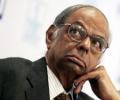
He feels that RBI could be waiting for a period or an opportune movement when there could be sustained reduction.
With inflation still ruling above the 9 per cent mark, Prime Minister's Economic Advisory Committee (PMEAC) on Wednesday suggested that the Reserve Bank should continue to focus on controlling the rising prices.

With major sectors of the economy showing signs of slowdown, the list of those pegging India's economic growth at below eight per cent in the current financial year is expanding.
C Rangarajan, chairman of the Prime Minister's Economic Advisory Council, on Thursday said he expects the Indian economy to grow by 8.5 per cent in FY'12 on the back of services sector and industry expansion, though he hinted that agriculture might not be a big contributor.
Although the economy did well during the second quarter (July-September) recording a growth of 7.9 per cent, the output of agriculture and allied sector slipped to below 1 per cent.
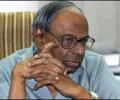
'The terminal year could yield nine per cent.'

Reserve Bank on Friday raised key interest rates by 25 basis points, its 12th such hike since March, 2010.

The Prime Minister's Economic Advisory Council on Friday said the economy will grow by 8.5 per cent, up from a projected 8.2 per cent, and inflation will come down from double digits to 6.5 per cent by the end of 2010-11.

Prime Minister Manmohan Singh last month had said inflation would moderate to 5-6 per cent by the end of the calender year.
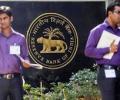
The overall inflation in March fell to 5.96 per cent.
He says though agriculture and industry would get a fillip in the second half of this financial year, a complete economic revival is expected only in 2013-14.

The accounting system of the central and state governments may change considerably, with a high-level committee suggesting sweeping changes in how expenditure is classified in Budget documents.

Slow growth of the US and Europe will have some adverse affect on Indian exports.

Prime Minister's Economic Advisory Council Chairman, C Rangarajan, on Wednesday echoed leading personalities saying the deteriorating quality of governance may come in the way of India achieving high growth on a durable basis.

Although the government had pegged fiscal deficit for the current financial year at 5.1 per cent of the GDP in the budget, it has revised the target to 5.3 per cent in view of subdued revenue collection and rising fuel and food subsidy bills.
Amid the crisis in Libya, increase in fuel prices would become 'inevitable' if crude oil remains at $100 per barrel, Prime Minister's Economic Advisory Council chairman C Rangarajan said on Monday.

The central bank is slated to review its credit policy on January 25.
.jpg)
India's CAD -- the gap between inflow and outgo of foreign exchange -- widened to a record high of $88 billion or 4.8 per cent of the gross domestic product for the fiscal ended March 31, from $78.2 billion in 2011-2012, about 4.2 per cent of the Gross Domestic Product.

He was speaking to reporters on the sidelines of a conference organised by the Madras School of Economics.

Industry chambers also sought conducive policies for completion of large infrastructure projects in time.
 © 2026 Rediff.com - Advertise with us - Disclaimer - Privacy Policy - Sitemap - Feedback - About us - Terms of use - Grievances